
The Opportunity Overload Problem: Why More Choices Lead to Worse Decisions
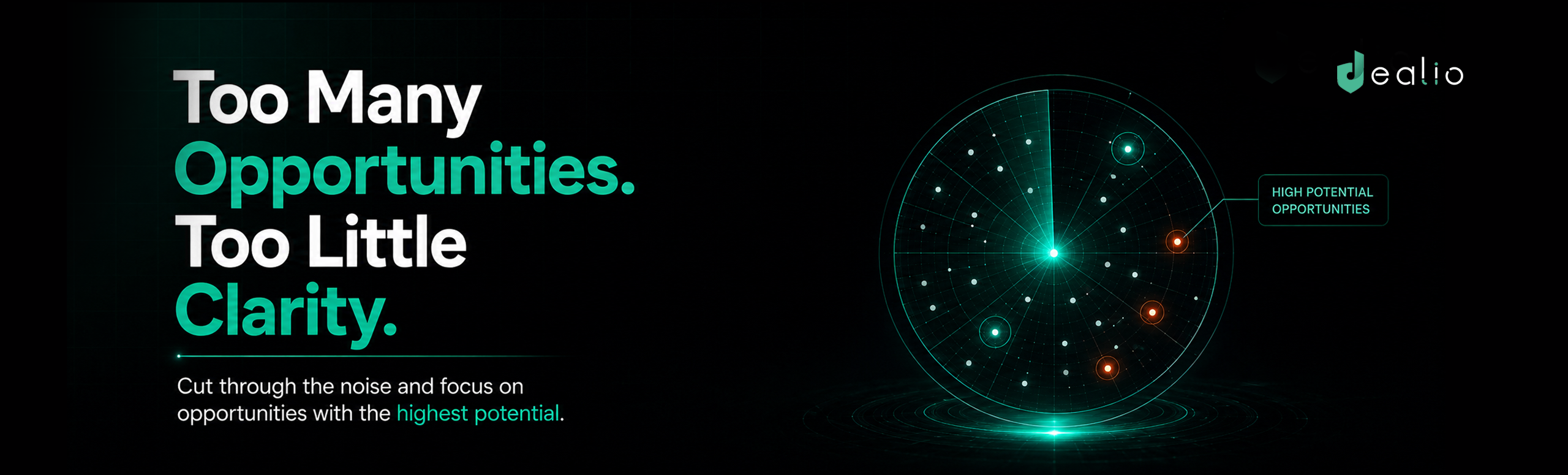
More Choices Don’t Always Lead to Better Investments
For years, investors struggled to find enough quality startups. Today, the challenge has completely changed.
Thanks to startup platforms, founder communities, AI-powered sourcing tools, and global networks, new investment opportunities appear every day. Access is no longer the problem. There are more companies to evaluate than ever before.
At first, this seems like a clear advantage. More choices should increase the chances of finding exceptional investments.
In reality, the opposite often happens.
When hundreds of startups compete for your attention, it becomes harder to know where to focus. Instead of making faster, more confident decisions, many investors spend more time comparing similar companies, reviewing endless pitch decks, and wondering whether an even better opportunity is waiting around the corner.
This is the opportunity overload problem.
The biggest advantage today isn’t having access to more startups. It’s knowing which ones deserve your attention.
The Paradox of Choice in Deal Discovery
Psychologists have long studied how people make decisions when faced with too many options. The surprising finding is that more choices don’t always make us happier or help us make better decisions.
In fact, having too many options often leads to hesitation, second-guessing, and decision paralysis.
The same thing happens in venture investing.
Every day brings new founder introductions, accelerator demo days, startup databases, AI recommendations, newsletters, and social media updates. Each source adds more companies to the pipeline, making it increasingly difficult to separate genuine potential from distraction.
Instead of feeling confident, investors often find themselves reviewing the same type of company again and again. Some delay investment decisions because they believe a better startup might appear tomorrow. Others spend so much time evaluating every option that promising companies move on before a decision is made.
More choice doesn’t automatically create better outcomes. Without a clear process, it often creates uncertainty.
When Too Much Information Gets in the Way
Access to data has never been easier.
Revenue growth, customer acquisition costs, retention metrics, founder interviews, market reports, product analytics, and competitive research are all available within minutes.
While each piece of information can be valuable, the sheer volume creates a different challenge.
When every startup comes with dozens of metrics, reports, and dashboards, it becomes difficult to identify what actually matters. Instead of focusing on the few indicators that predict long-term success, it’s easy to become distracted by numbers that look impressive but add very little context.
More information doesn’t always create more clarity. Without a structured way to evaluate startups, it often creates confusion. The real challenge isn’t collecting more data. It’s identifying which insights actually matter. Modern AI systems help transform overwhelming volumes of information into meaningful signals, making it easier to focus on patterns that support better investment decisions. Learn more about how AI turns data noise into actionable financial signals.
Decision Fatigue Is More Common Than You Think
Every investment decision requires focus.
Reviewing one startup is manageable. Reviewing fifty in a week is something entirely different.
As more decisions pile up, mental energy naturally starts to decline. This is known as decision fatigue, and it affects everyone, even experienced investors.
When people become mentally tired, they tend to rely on shortcuts. They dismiss companies too quickly, spend too much time on the wrong startups, or postpone important decisions altogether.
Over time, this reduces consistency.
A company reviewed first thing in the morning may receive far more attention than one reviewed late in the afternoon, even if both have similar potential.
That’s one of the hidden costs of reviewing too many startups at once.
Why Bigger Pipelines Don’t Always Produce Better Results
It’s easy to believe that reviewing more startups increases the chances of finding the next unicorn.
But quantity doesn’t always improve quality.
As pipelines grow, the amount of time available for each company naturally decreases. Important details are easier to miss, strong startups become harder to spot, and attention shifts toward companies with the loudest stories instead of the strongest fundamentals.
A smaller, well-qualified pipeline often delivers better outcomes than a massive list filled with average opportunities.
The goal isn’t to review everything.
The goal is to focus on the companies that truly deserve deeper evaluation.
How to Stay Focused Without Missing Great Opportunities
The best investors don’t try to evaluate every startup equally.
Instead, they build systems that make good decisions easier.
They define clear investment criteria before reviewing companies. They prioritize startups that match their thesis. They follow consistent evaluation frameworks instead of relying on instinct alone. Most importantly, they protect their attention by limiting the number of companies under active review.
Technology can also help reduce the complexity of evaluating large numbers of startups. AI-powered platforms can organize data, surface relevant opportunities, and highlight potential risks long before they become obvious. Explore how Dealio’s AI solutions are transforming risk management in fintech.
Platforms like Dealio organize large volumes of startup data, highlight the companies that best match your investment strategy, and reduce the time spent sorting through low-fit opportunities.
Instead of creating more work, the right tools help you focus on what matters most.
Final Thoughts
The challenge facing investors today isn’t finding opportunities.
It’s knowing which ones deserve attention.
As deal flow continues to grow, the ability to filter, prioritize, and stay focused becomes a competitive advantage. The investors who consistently make better decisions aren’t reviewing the most startups. They’re spending their time on the right ones.
Dealio helps make that possible by turning overwhelming deal flow into a focused pipeline, giving investors more clarity and more confidence in every decision.